
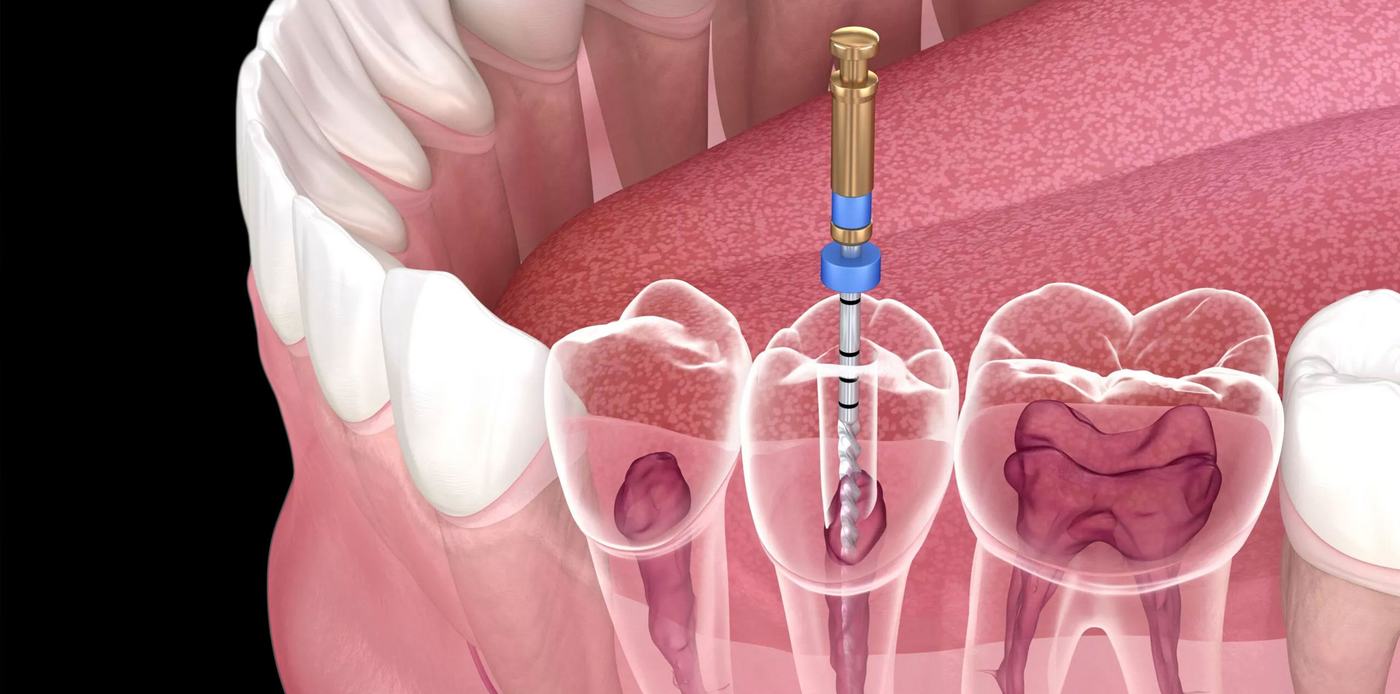
What is actually happening in there.
Inside every tooth is a soft core of nerve and blood vessels. When decay, a crack or an old deep filling lets bacteria reach it, that tissue becomes inflamed and then infected — which is what produces the throbbing, the sensitivity to heat, and eventually the swelling.
Root canal treatment removes the infected tissue, disinfects the space and seals it. The tooth stays in your jaw and keeps doing its job. Because a treated tooth is more brittle, we will usually recommend a crown afterwards to stop it fracturing.

Signs you may need one
Lingering pain to heat
Sensitivity that keeps going for a minute or more after the hot drink is gone.
Pain that wakes you
A throb that is worse lying down is a classic sign of pulp inflammation.
A darkening tooth
A single tooth going grey often means the nerve has died, even without pain.
A gum boil
A small recurring pimple on the gum beside a tooth is infection finding a way out.
Common questions
Answers before you book.
Still unsure about something? Call (903) 630-7357 and talk it through with our team.
Does a root canal hurt?
The procedure itself is done fully numb and is usually no more uncomfortable than a filling. What hurts is the infection beforehand — the treatment is what relieves it.
Why do I need a crown afterwards?
A root-treated tooth has lost its internal blood supply and more of its structure, which makes it prone to splitting. A crown holds it together.
Could I just have it pulled instead?
You can, and sometimes that is the right call. But replacing a tooth with an implant or bridge costs considerably more than saving the one you have. We will lay out both options and the costs.