

April 18, 2025

Root Canal Demystified: A Comprehensive Guide For First-Timers
The phrase “root canal” is a panic, especially if that is one’s first experience. However, with improved dental technology and techniques, root canal therapy is much simpler and less painful. Do you know that root canal treatment can effectively save your teeth from permanent loss? Additionally, it helps eliminate any discomfort patients face due to damaged teeth. This guide blog will teach you everything you need to know before your first root canal. Adequate and transparent knowledge will help you feel confident when you walk through the door of your appointment.
What Is a Root Canal and Why Is It Necessary?
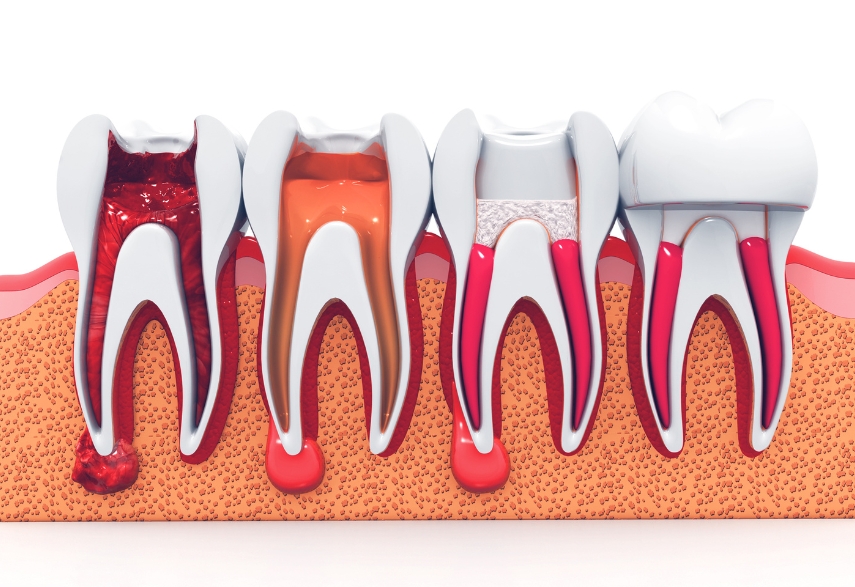
A root canal is a dental treatment intended to remove infection or damage within a tooth’s pulp. Pulp is the soft tissue that holds dental nerves and blood vessels. When decay, trauma, or a deep cavity reaches this region, it can result in inflammation or infection, causing pain, sensitivity, or even an abscess. Instead of removing the tooth, a root canal lets your dentist remove the infected pulp, clean the area, and seal it. Professionals intend to leave the natural tooth structure intact and function restored.
Signs You Might Need a Root Canal
Root canal therapy is usually prescribed when the tooth’s pulp is infected or inflamed. Some common signs that you would require a root canal are:
- Persistent tooth pain
- Prolonged sensitivity to hot or cold
- Swollen gums or pimple-like swelling on the gum
- Tooth discoloration
- Pain on chewing or contact with the tooth
It is best to treat these signs early. Waiting until later can lead to more infection and even tooth loss.
What to Expect During the Procedure?
For most first-timers, the fear of being unknown can be the most frightening aspect. Here’s what usually happens during a root canal:
- Numbing the Area: Local anesthetic is used to avoid painful treatment.
- Accessing the Pulp Chamber: The dentist makes a small hole in the tooth’s crown.
- Cleaning and Shaping: Pulp infection is removed, and the root canals are cleaned, disinfected, and shaped.
- Filling and Sealing: The space is filled with a special gutta-percha substance and sealed to prevent further infection.
- Restoration: In most cases, a crown is placed on the tooth at a subsequent visit to restore its strength and function.
Most root canals are finished in two visits, depending on how complicated the case is.
Recovery and Aftercare Tips
Recovery from a root canal is relatively rapid and uneventful. Most patients can resume work or school the following day. Some tips for an easy recovery are:
- Take over-the-counter pain medication as advised
- Don’t chew on the treated tooth until it is completely restored
- Practice good oral hygiene with brushing and flossing
- Return to your dentist for the final crown placement
You might have mild soreness for a few days, but severe discomfort is uncommon. If the discomfort extends, you should bring it to your dentist’s attention.
Long-Term Advantages of Root Canal Treatment
Root canal treatment has several long-term advantages, particularly over tooth extraction:
- Saves your natural tooth
- Retains proper bite and alignment
- Prevents the surrounding teeth from moving
- Erases infection and safeguards oral health
If well cared for, a tooth treated with a root canal can last as long as your natural teeth. Regular dental checkups and good oral hygiene are essential in keeping the treated tooth healthy.
Take the Fear Out of Root Canals
Root canals have such a bad image today that they hardly resemble reality as practiced in current dentistry. With techniques in use now, the process is exceptionally efficient and quick. It is not significantly more unpleasant than having a basic filling done. If this is your first root canal, do not worry—you’re doing something intelligent. This treatment will help conserve your dental wellness and save your original smile.